Key takeaways
- Manuka honey comes from New Zealand and Australia; wildflower honey is a raw, multifloral honey produced by British beekeepers close to home.
- Manuka's antibacterial reputation rests on methylglyoxal (MGO), while raw wildflower honey owes its natural enzyme activity to glucose oxidase and hydrogen peroxide.
- Neither honey should be given to babies under 12 months, and both should be kept raw and unheated to preserve their natural properties.
- Raw wildflower honey is typically far more affordable than graded manuka and supports independent British beekeepers and native pollinators.
- For everyday immune support, raw, unheated wildflower or heather honey from a known beekeeper is a genuine, local alternative to imported manuka.
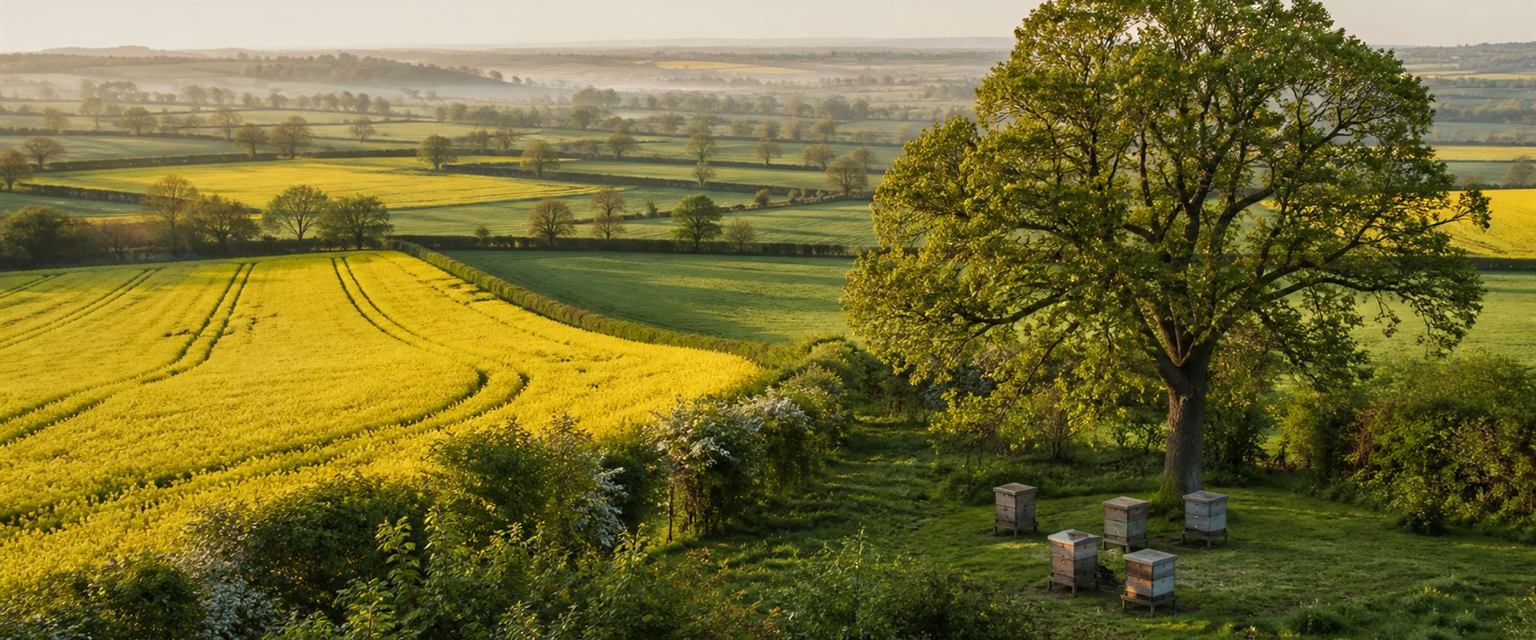
Wildflower honey and manuka honey are both raw honeys prized for their natural properties, but they differ in origin, flavour, and the science behind their reputations. Manuka honey comes from the nectar of the manuka bush (Leptospermum scoparium), native to New Zealand and parts of Australia, and is valued for its high, stable levels of methylglyoxal (MGO), a compound linked to antibacterial activity. Wildflower honey, by contrast, is a raw, multifloral honey produced by bees foraging across British hedgerows, meadows, and gardens, offering broad-spectrum natural enzyme activity, regional character, and a much smaller food mile than any imported honey.
What actually makes manuka honey different?
Manuka honey's distinctive selling point is methylglyoxal, a naturally occurring compound that forms as the honey matures and is present in far higher concentrations than in most other honeys. This is why manuka is graded using systems like UMF (Unique Manuka Factor) or MGO ratings, with higher numbers commanding higher prices. Research published by bodies such as the NHS and academic studies on honey's antibacterial properties have looked at manuka's potential wound-care applications, though it's worth noting most robust clinical evidence relates to topical use on wounds, not oral consumption for immunity.
Genuine, high-grade manuka is expensive, frequently imported over thousands of miles, and has also been subject to well-documented issues with mislabelling and dilution in the global market — something worth bearing in mind when buying.
What makes British wildflower honey special?
Wildflower honey isn't a single, standardised product like manuka — it's a living reflection of whatever is blooming near the hive that season, from clover and bramble to dandelion, hawthorn, and wild herbs. This means every jar carries a genuine sense of place and time. Raw, unheated wildflower honey retains its natural enzymes, pollen traces, and antioxidants because it hasn't been pasteurised or heavily filtered — processes that can strip out the very compounds that make raw honey interesting in the first place.
All honey naturally contains some hydrogen peroxide, produced by the enzyme glucose oxidase that bees add to nectar. This is part of what gives raw honey its natural antimicrobial character, quite apart from the specific methylglyoxal pathway that manuka relies on. Raw wildflower honey from a British beekeeper who doesn't heat-treat their harvest keeps this enzyme activity intact.
How do wildflower and manuka compare for immunity?
When people search for the best honey for immunity, they're usually hoping honey will support their body's natural defences during cold and flu season. Both raw wildflower honey and raw manuka honey contain natural antioxidants, trace enzymes, and antibacterial compounds — manuka through methylglyoxal, wildflower through hydrogen peroxide activity and its diverse pollen and phytochemical content from multiple plant sources.
Honey of any kind, including raw wildflower honey, is well recognised as an effective soother for coughs and sore throats — a use supported by NHS guidance on treating a cough. What matters most for either honey is that it's raw and unheated, since heat processing (common in blended and imported honeys) degrades the very enzymes and compounds people are seeking when they choose honey over a jar of sugar syrup.
Is there a British alternative to manuka honey?
If you like the idea of manuka's raw, enzyme-rich reputation but would rather support British producers, raw wildflower honey is the natural manuka alternative British beekeepers can offer. Two options worth exploring:
- Raw wildflower honey — multifloral, seasonal, and reflective of the British countryside, with all the natural enzyme activity intact because it's never heated.
- Heather honey — a distinctive, thixotropic honey from moorland heather, prized for its deep amber colour, robust flavour, and higher natural viscosity, often compared to manuka in texture and intensity.
Both are produced by small-scale, independent beekeepers rather than shipped halfway around the world, which means fresher honey, full traceability back to the hive, and support for local pollinator populations along the way.
How do they compare in taste and texture?
Manuka honey tends to have a strong, earthy, slightly bitter or medicinal flavour with a thick, treacly texture — a taste some people love and others find overpowering. Wildflower honey is generally lighter, sweeter, and more floral, though the exact character shifts from batch to batch depending on the season and location. Heather honey sits somewhere in between: dense, jelly-like, and richly flavoured, arguably the closest British equivalent to manuka's intensity.
Blossom honey, made predominantly from fruit tree and hedgerow blossom in spring, offers a gentler, more delicate alternative — lovely drizzled over yoghurt or stirred into tea without dominating the flavour.
Which honey should you choose?
The right choice depends on what you're after:
- For everyday wellbeing and a light, versatile honey — raw wildflower honey is an excellent, affordable choice that works in tea, baking, or straight off the spoon.
- For a robust, intensely flavoured honey with a manuka-like character — try heather honey from a British moorland beekeeper.
- For delicate spring sweetness — blossom honey is gentler and ideal for those who find stronger honeys overpowering.
- For wound care specifically — clinically graded manuka honey remains the most researched option, though this is a specialist use case rather than a everyday kitchen choice.
Whatever you choose, the single most important factor is whether the honey is raw and unheated. Many supermarket jars, including some labelled as wildflower or manuka blends, are pasteurised and blended from honey sourced across multiple countries, which erodes both flavour and the natural properties raw honey is valued for.
How can you be sure you're getting the real thing?
The best way to guarantee raw, unheated, single-origin honey is to buy directly from the beekeeper who produced it. Independent British beekeepers typically harvest in small batches, extract gently without high heat, and can tell you exactly which fields, woods, or moorlands their bees foraged. This traceability is something large-scale blended or imported honey simply cannot offer.
Find raw honey from a beekeeper near you and discover wildflower, heather, and blossom honey harvested close to home — full of character, provenance, and the natural properties raw honey is meant to have.
Find raw honey from a beekeeper near you
Written by Local Honey — championing pure, raw honey from independent British beekeepers.
This article is for general information and is not medical advice.
Frequently asked questions
Is wildflower honey as good as manuka honey for health?
Both are raw honeys with natural antibacterial properties, though through different mechanisms — manuka via methylglyoxal, wildflower via hydrogen peroxide and diverse plant compounds. For everyday immune support and soothing coughs, raw wildflower honey is a genuinely effective, affordable choice; manuka's clinical research focuses more on topical wound care.
Why is manuka honey so much more expensive than wildflower honey?
Manuka honey is graded by UMF or MGO rating reflecting its methylglyoxal content, is produced in limited regions of New Zealand and Australia, and must be imported, all of which drives up cost. Raw wildflower honey is produced locally by independent beekeepers, keeping it fresher and considerably more affordable.
What's the best British alternative to manuka honey?
Heather honey is often considered the closest British equivalent in terms of intensity and texture, while raw wildflower honey offers a lighter, more versatile everyday alternative — both retain full natural enzyme activity when raw and unheated.
Can wildflower or manuka honey be given to babies?
No. Neither wildflower, heather, blossom, nor manuka honey should be given to babies under 12 months due to the small risk of infant botulism, as advised by the NHS.
Ready to taste the real thing?
Find raw, unheated honey from an independent beekeeper near you.
Find a beekeeper