Key takeaways
- Wildflower honey is multifloral, made from whatever is blooming nearby, so its flavour and colour shift with the seasons and region.
- Clover honey is closer to monofloral, dominated by white or red clover nectar, giving a milder, more consistent taste.
- Neither is 'better': the choice comes down to whether you want variety and complexity or a gentle, reliable sweetness.
- Always check the label for raw, unheated and single-origin claims, as many supermarket honeys are blended from imported sources.
- Buying directly from a British beekeeper is the best way to know exactly which flowers your honey came from.
Wildflower honey and clover honey differ mainly in their floral source: wildflower honey is a multifloral blend gathered from many different flowering plants in one area, giving it a complex, ever-changing flavour, while clover honey is closer to a monofloral honey, made predominantly from white or red clover nectar, resulting in a milder, softer, more consistent taste. Both can be raw and unheated, but their character, colour and use in the kitchen differ noticeably.
What Makes a Honey 'Wildflower' or 'Clover'?
Honey takes on the character of whatever flowers the bees visit while foraging. When beekeepers describe a honey by its floral source, they're really describing where the hive was placed and what was in bloom at the time.
Wildflower honey isn't a single recipe. It's a snapshot of a particular hedgerow, meadow or verge over a few weeks: hawthorn, bramble, dandelion, clover, thistle and dozens of wild plants all contributing nectar in shifting proportions. No two batches are quite the same, even from the same beekeeper, because the mix of blooms changes with the season and the weather.
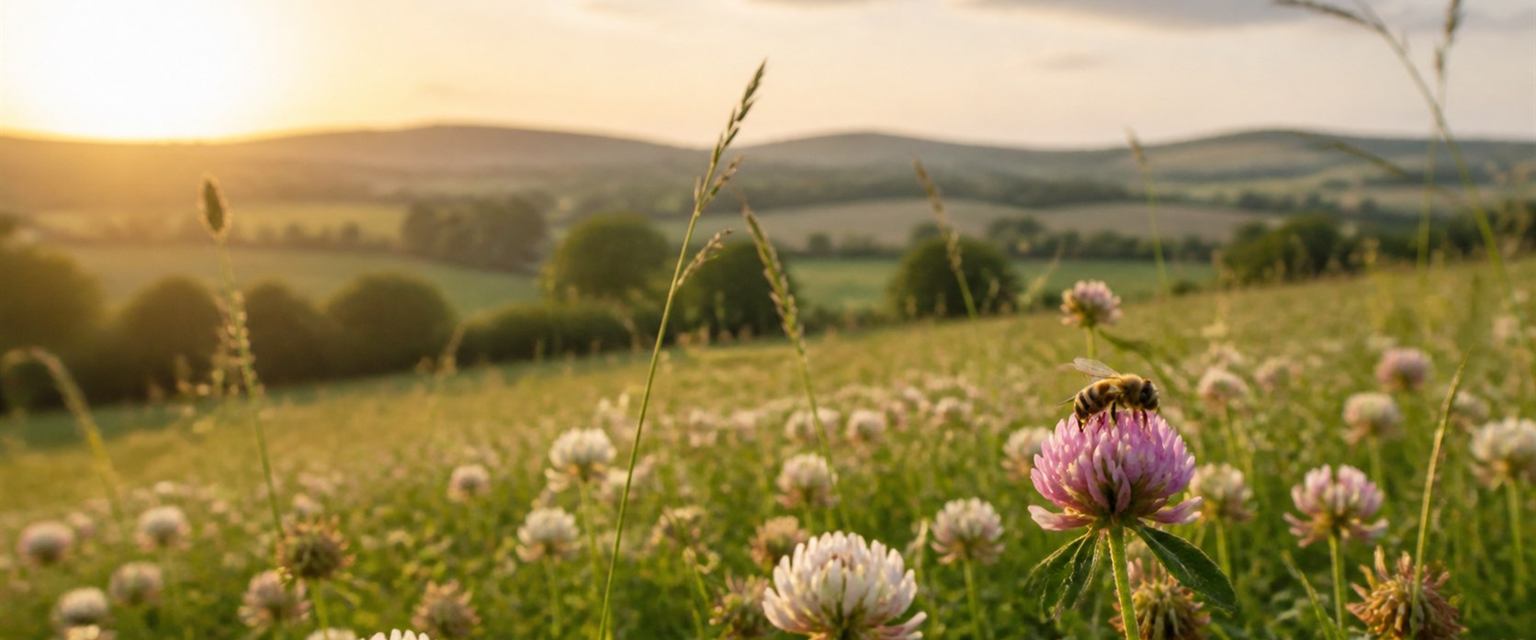
Clover honey, by contrast, tends to come from hives kept near large stands of agricultural clover, whether that's white clover in pasture or red clover grown as a fodder crop. Because clover often flowers so abundantly and for such a sustained period, bees can gather enough nectar from it alone to produce a honey where clover dominates, even if a little pollen from other plants is present too.
Multifloral vs Monofloral Honey: Where Do These Sit?
In the language beekeepers and honey graders use, this is really a multifloral vs monofloral honey comparison. Multifloral honeys, like most wildflower honey, are blends of many nectar sources with no single plant dominating. Monofloral honeys are named for one predominant flower, usually because at least 45 to 50 percent of the pollen present comes from that plant.
True single origin honey, whether monofloral clover, heather or blossom, is prized precisely because it offers a more predictable, traceable flavour. Multifloral wildflower honey is valued for the opposite reason: its complexity and sense of place. For more detail on how monofloral honeys are classified, the British Beekeepers Association has useful background on honey types and terminology used in the UK.
How Do They Taste and Look Different?
Wildflower Honey
Wildflower honey usually has a deeper amber colour and a more layered, sometimes slightly herbaceous or fruity flavour. Because it draws on many plants, it can carry hints of anything from soft floral notes to something more robust and earthy, depending on what was flowering nearby. Texture varies too: some batches granulate quickly into a soft-set honey, others stay runny for longer.
Clover Honey
Clover honey is typically pale gold to light amber, with a clean, mild, sweet flavour and a gentle floral note rather than anything sharp or complex. It's often the honey people picture when they think of a classic, approachable British honey; the kind that suits everyday tea, toast and baking without competing with other flavours.
Which One Should You Choose?
There's no single right answer, it depends on how you intend to use the honey.
- For everyday use, clover honey's mild sweetness makes it easy to spoon into porridge, yoghurt or a cup of tea without overpowering anything.
- For cooking and baking, either works well, though wildflower honey's extra depth can add interest to marinades, dressings and glazes.
- For tasting and gifting, wildflower honey's variability is part of the appeal. A jar from a Yorkshire hedgerow will taste noticeably different from one gathered near a Cornish meadow, which makes it a lovely way to explore regional character.
- For those curious about provenance, both are worth comparing side by side as a single origin honey comparison exercise, tasting how location and season shape flavour even within the same broad style.
If you're keen to taste the difference for yourself, find raw honey from a beekeeper near you and ask what was flowering when your jar was harvested. Independent beekeepers can usually tell you almost exactly where their bees were foraging that season, something a supermarket blend simply can't offer.
Why Floral Source Matters More Than the Label Suggests
Many honeys sold in large supermarkets are blended from honey sourced across several countries, then heated and filtered to create a smooth, shelf-stable product with a long best-before date. This process strips out much of the pollen, enzymes and subtle flavour compounds that make raw honey interesting, and it also erases any real sense of floral source or provenance. A jar simply labelled 'honey' or 'pure honey' with no origin or floral information is very unlikely to be either single origin or raw.
British raw honey, whether wildflower, clover, heather or blossom honey, is extracted gently and never heated beyond the natural warmth of the hive, preserving its natural enzymes, pollen and delicate aromatics. Choosing raw wildflower honey or a clover-dominant jar from a known beekeeper means you're getting an accurate picture of honey floral source rather than a standardised blend.
The Api Services UK Honey Standards and similar industry guidance note that genuine monofloral claims require a dominant pollen count from that plant, which is one reason serious beekeepers test or closely monitor their hive locations before labelling a jar as clover or heather honey.
How to Tell If Your Honey Is Genuinely Raw and Single Origin
- Check for a clear statement of raw and unheated on the label.
- Look for a named beekeeper, apiary or region rather than a vague 'produce of more than one country' label.
- Expect some natural granulation over time; this is a sign of minimal processing, not a fault.
- Ask when and where the honey was harvested; a genuine small-scale beekeeper will usually know this in detail.
Bringing It Together
Wildflower and clover honey both have a place in a British kitchen, one bringing seasonal complexity, the other a gentle, familiar sweetness. What matters most, whichever you prefer, is choosing raw, unheated honey with a clear, honest floral source rather than a blended or imported alternative. When you're ready to taste the difference between a true multifloral wildflower honey and a softer monofloral clover jar, explore beekeepers near you and discover honey shaped by a specific patch of British countryside rather than a global supply chain.
Find raw honey from a beekeeper near you
Written with the help of AI for Local Honey, championing pure, raw honey from independent British beekeepers.
This article is for general information and is not medical advice.
Frequently asked questions
Is wildflower honey healthier than clover honey?
Both can offer similar general benefits when raw and unheated, including natural enzymes and trace pollen. Wildflower honey tends to have a broader range of plant compounds due to its multifloral nature, but neither is definitively 'healthier'; the bigger factor is whether the honey has been heated or blended, which reduces these natural qualities.
Why does clover honey taste milder than wildflower honey?
Clover honey is close to monofloral, dominated by nectar from one plant, so its flavour is gentle and consistent. Wildflower honey draws on many different flowers, which adds layers of flavour that can be sweeter, earthier or more herbaceous depending on the season and location.
Can wildflower honey vary between jars from the same beekeeper?
Yes. Because wildflower honey depends on whatever is flowering near the hive at the time, even the same beekeeper's jars can differ from one harvest to the next, reflecting seasonal changes in the surrounding landscape.
How can I be sure a honey is truly single origin?
Look for clear labelling stating raw, unheated and a specific region or apiary, ideally with the beekeeper named. Genuine single origin and monofloral honeys are usually sold by small-scale, independent beekeepers rather than large blended brands.
Ready to taste the real thing?
Find raw, unheated honey from an independent beekeeper near you.
Find a beekeeper