Key takeaways
- Single origin honey comes from one beekeeper, one location and typically one main flowering source, unlike blended honey mixed from multiple countries.
- Traceable provenance means you can trace the honey back to a specific apiary, beekeeper and harvest date, something supermarket blends rarely offer.
- Regional single flower honeys such as heather, wildflower and blossom taste distinctly different depending on the plants and soil of their area, a concept known as British terroir.
- Genuine single origin honey is raw and unheated, retaining pollen, enzymes and aroma that mass-processed honey loses.
- Buying directly from independent beekeepers is the surest way to guarantee authentic single origin honey rather than blended imports.
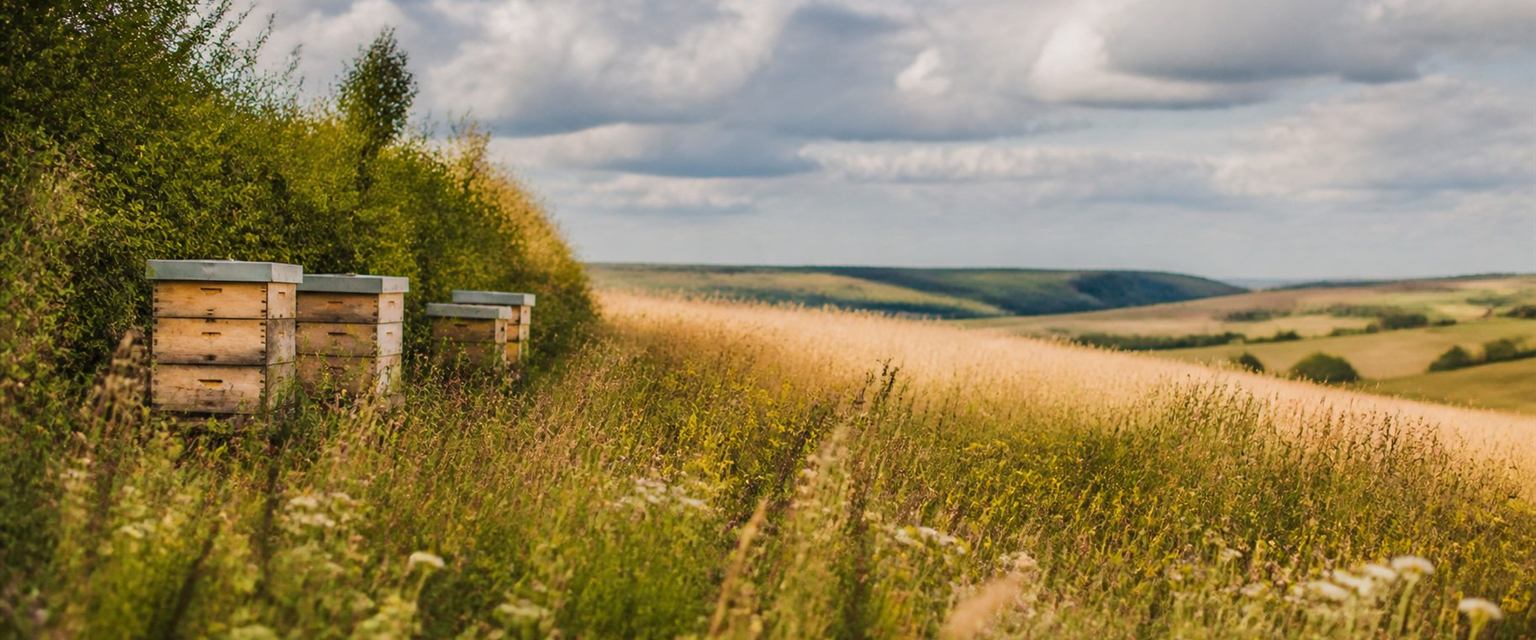
Single origin honey UK refers to honey harvested from one beekeeper's hives in a specific location during a defined flowering period, rather than blended from multiple sources or countries. Unlike the honey found on most supermarket shelves, which is often a mix of honeys from several continents, single origin honey can be traced back to the exact apiary, region and season it came from, giving it a distinct flavour shaped by the local flora and landscape.
What Does "Single Origin" Mean for Honey?
In the world of coffee and chocolate, "single origin" has become shorthand for traceability and quality. Honey works the same way. A single origin honey comes from one set of hives, tended by one beekeeper, in one place, during one nectar flow. It hasn't been mixed with honey from other apiaries, countries or seasons to create a consistent, uniform product.
This matters because honey is an agricultural product shaped entirely by its surroundings. Bees forage within roughly a three mile radius of their hive, so the character of the honey reflects the plants, hedgerows, moorland or orchards growing in that particular patch of Britain. Blend honey from Yorkshire moorland with honey from Kent orchards and you lose that specificity entirely.
Why Provenance Matters: Traceable Honey Provenance from Hive to Jar
Traceable honey provenance is the backbone of genuine single origin honey. It means a jar can be linked to a named beekeeper, a specific apiary location and a harvest date, not just a country of origin printed in small type. This transparency matters for several reasons:
- Authenticity: Traceability makes adulteration and mislabelling far harder, an issue that has plagued the global honey trade for years, as highlighted in EU and UK investigations into honey fraud.
- Quality assurance: When you know which beekeeper produced your honey, you can ask how it was extracted, whether it was heated, and how it was filtered.
- Supporting local economies: Traceable honey keeps money within British beekeeping rather than supporting large-scale imported blends.
The British Beekeepers Association has long championed transparency in honey labelling, encouraging consumers to look beyond vague terms like "produce of more than one country", a phrase permitted under current honey labelling regulations but one that tells you almost nothing about what's actually in the jar.
How Regional Single Flower Honey Reflects British Terroir
Just as wine reflects the soil and climate of its vineyard, regional single flower honey reflects British terroir, the unique combination of geology, climate, rainfall and plant life in a given area. A heather honey from the North York Moors will taste utterly different from a lime blossom honey gathered in a Somerset orchard, even though both are technically "raw British honey".
Single flower honeys are named for the dominant nectar source bees collected during a particular flow, though in reality they're never 100% pure to one flower. Instead, they're predominantly one variety, with subtle traces of whatever else was blooming nearby. This is what gives single origin honey its complexity: a wildflower honey from Devon might carry notes of gorse and bramble, while one from the Scottish Borders leans towards clover and thistle.
Find raw honey from a beekeeper near you to taste this regional variation for yourself, comparing jars from different counties side by side is one of the best ways to understand how deeply location shapes flavour.
Wildflower, Blossom and Heather: Britain's Signature Single Origin Honeys
Three honey types dominate the British single origin landscape, each with its own character:
Raw wildflower honey is gathered from a broad mix of hedgerow and meadow plants, from dandelion and clover to bramble and knapweed. Its flavour shifts with the seasons and region, but it's typically light, floral and gently sweet.
Blossom honey comes from fruit trees such as apple, pear and cherry, or from garden and hedgerow shrubs flowering in spring. It's often delicate and mild, with a fresh, almost fruity aroma.
Heather honey is perhaps Britain's most distinctive single origin honey, produced when bees are moved to moorland in late summer to forage on ling heather. It's thick, almost jelly-like in texture, with a deep amber colour and a robust, slightly smoky flavour that's unmistakably different from lowland honeys.
Each of these represents a genuine single origin product when sourced from one beekeeper and one location, rather than blended across regions to smooth out seasonal variation.
How to Identify Genuine Single Origin Honey
A few practical checks help separate true single origin honey from marketing language:
- Look for a named beekeeper or apiary, not just a brand name.
- Check for a harvest region or county, ideally with some detail about the landscape (moorland, orchard, meadow).
- Confirm it's raw and unheated, since gentle processing preserves the pollen profile that can even help verify origin through pollen analysis (melissopalynology).
- Avoid jars labelled "blend of EU and non-EU honeys", a strong indicator of mass-produced, non-traceable product.
Single Origin vs Blended Supermarket Honey
Most blended supermarket honey and imported honey is created for consistency and shelf stability, not character. Large processors combine honey from multiple countries, often heating and ultra-filtering it to prevent crystallisation and extend shelf life. This process strips out pollen, softens flavour and erases any sense of place.
Single origin honey does the opposite. It embraces seasonal and regional variation as a feature, not a flaw. Crystallisation, colour changes and flavour shifts from batch to batch are signs of an unadulterated, minimally processed product, not a defect.
Seasonal Variation: Why Single Origin Honey Changes Year to Year
Because single origin honey is tied to a specific place and flowering period, it will never taste exactly the same twice. A wet spring, an early frost, or a particularly strong heather bloom all influence the nectar available to bees, and therefore the honey they produce. This vintage-like quality is part of what makes single origin honey so interesting to explore, much like seasonal produce or small-batch cider.
Where to Buy Genuine Single Origin Honey in the UK
The most reliable way to buy authentic single origin honey is directly from the beekeeper who produced it. Farm shops, local markets and dedicated platforms connecting customers with independent beekeepers all offer far greater transparency than supermarket shelves. Find raw honey from a beekeeper near you and you'll often be able to ask exactly which fields, moors or orchards your honey came from, and when it was harvested.
FAQ
Find raw honey from a beekeeper near you
Written with the help of AI for Local Honey, championing pure, raw honey from independent British beekeepers.
This article is for general information and is not medical advice.
Frequently asked questions
What does single origin honey mean?
Single origin honey comes from one beekeeper's hives in a specific location during a defined nectar flow, rather than being blended from multiple regions or countries. It reflects the local flora and landscape of that one place.
Is single origin honey the same as raw honey?
Not necessarily, though the two often go together. Single origin refers to traceable geographic and seasonal origin, while raw refers to processing (unheated, minimally filtered). The best single origin honeys, like those from independent British beekeepers, tend to be both.
How can I tell if honey is genuinely British and single origin?
Look for a named beekeeper, a specific region or county on the label, and confirmation that it's raw and unheated. Avoid jars labelled as a blend of honeys from multiple countries, as this indicates mass-produced, non-traceable honey.
Why does single origin honey taste different from batch to batch?
Because it depends on local weather, soil and flowering patterns each season, single origin honey naturally varies year to year, similar to wine vintages. This variation is a sign of authenticity, not inconsistency.
Ready to taste the real thing?
Find raw, unheated honey from an independent beekeeper near you.
Find a beekeeper