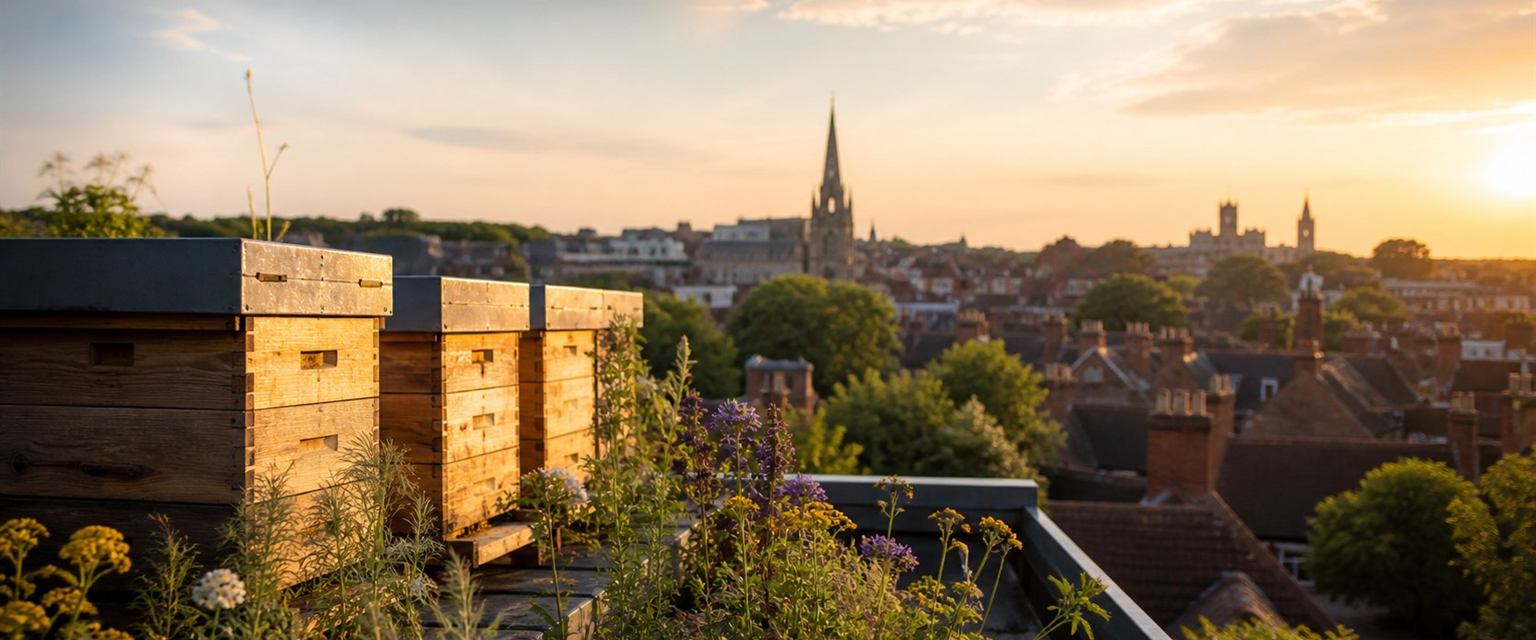
Key takeaways
- British beekeepers protect bees through disease monitoring, responsible hive management, and planting forage to support pollinators year-round
- Sustainable beekeeping practices include limiting honey extraction, avoiding harmful chemical treatments, and rotating apiary sites to reduce environmental strain
- Bee conservation in Britain involves collaboration between independent beekeepers, the British Beekeepers Association, and conservation charities like Bumblebee Conservation Trust
- Choosing raw, local honey from independent beekeepers directly supports the small-scale, low-intervention practices that keep bee populations healthier
- Pollinator-friendly beekeeping means working with the landscape, not against it, favouring native wildflowers and seasonal forage over monoculture
British beekeepers protect bees primarily through vigilant disease and pest monitoring, sustainable hive management that avoids over-harvesting honey, planting diverse forage to extend the seasonal nectar flow, and working alongside conservation bodies to safeguard wild pollinator habitats. Rather than treating colonies as purely productive units, most independent UK beekeepers now practise a form of stewardship that puts the long-term health of bees ahead of short-term yield.
This shift matters. Bee populations across Britain, both managed honeybee colonies and wild pollinators, face mounting pressure from habitat loss, pesticide exposure, and diseases such as varroa mite infestation. The response from Britain's beekeeping community has been practical, rooted in tradition, but increasingly informed by ecological science.
Why Do Bees Need Protecting in the First Place?
Both honeybees and wild pollinators such as bumblebees and solitary bees are under sustained pressure in the UK. Intensive agriculture has reduced the variety of flowering plants available across much of the countryside, while the varroa destructor mite, first recorded in the UK in 1992, remains one of the most serious threats to honeybee colonies. Climate variability has also disrupted traditional flowering patterns, meaning bees sometimes emerge from winter before adequate forage is available.
The Bumblebee Conservation Trust notes that two UK bumblebee species have already gone extinct, and several others are under threat. This broader pollinator crisis is precisely why sustainable beekeeping practices in the UK have become so important, not just for honeybees, but for the wider ecosystem they share with wild pollinators.
What Sustainable Beekeeping Practices Are UK Beekeepers Using?
Most independent British beekeepers now follow a set of practices designed to minimise stress on colonies and maximise their resilience.
Careful disease and pest monitoring. Regular hive inspections allow beekeepers to spot early signs of varroa mites, foulbrood, or other diseases before they spread. Many use integrated pest management approaches that reduce reliance on chemical treatments, favouring methods like brood interruption and drone comb trapping instead.
Responsible honey extraction. Rather than harvesting every available drop, sustainable beekeepers leave sufficient honey stores for the colony to survive winter without needing artificial sugar syrup as a substitute. This is one of the clearest markers of quality: honey taken this way tends to be raw and unheated, retaining its natural enzymes and pollen content rather than being processed for volume.
Reduced hive movement and rotation. Some large-scale commercial operations move hives long distances to follow crop pollination contracts, which can stress colonies. Many British beekeepers instead keep apiaries settled within a local area, allowing bees to build familiarity with their forage range and reducing transportation stress.
Swarm management over suppression. Swarming is a natural part of colony reproduction. Rather than aggressively preventing it, many beekeepers now manage swarms thoughtfully, either by creating splits to expand their own apiaries or by safely rehoming swarms rather than destroying them.
If you want to support these practices directly, find raw honey from a beekeeper near you and see exactly how your local producers manage their hives.
How Does Pollinator Friendly Beekeeping Support Wild Bees Too?
Pollinator friendly beekeeping recognises that honeybees are just one part of a much larger pollinator community. Overstocking an area with honeybee hives can actually increase competition for nectar and pollen with wild bees, hoverflies, and butterflies, so many beekeepers now think carefully about hive density relative to local forage availability.
Practical steps include:
- Planting or encouraging native wildflowers, hedgerows, and flowering trees near apiaries
- Avoiding pesticide use on land they manage, and choosing sites away from heavily sprayed agricultural land
- Leaving some hedgerows and field margins unmown during flowering periods
- Supporting mixed forage landscapes that benefit bumblebees and solitary bees, not just honeybees
This is part of why the flavour and character of raw wildflower honey varies so much between regions. It reflects a genuinely diverse floral landscape, one that benefits far more than the honeybees alone. Heather moorland, too, supports a distinct ecosystem, and the production of heather honey depends on beekeepers maintaining access to increasingly rare unimproved moorland habitats, land that also supports curlew, skylark, and other declining species.
What Role Do Conservation Organisations Play?
Bee conservation efforts in Britain extend well beyond individual apiaries. The British Beekeepers Association (BBA) provides training, disease surveillance support, and advocacy for sustainable practices across the country. Regional associations run apiary inspections and educational courses that help new beekeepers start with sound, low-intervention methods from day one.
Meanwhile, organisations like the Bumblebee Conservation Trust and the Xerces Society (with UK-relevant research) focus specifically on wild pollinator habitat restoration, an essential complement to managed honeybee conservation. The National Bee Unit, part of the Animal and Plant Health Agency, also monitors notifiable bee diseases and provides guidance to beekeepers on biosecurity.
This layered approach, individual beekeepers, regional associations, national bodies, and conservation charities working in parallel, is what makes British bee conservation relatively robust compared with some other countries, though challenges remain significant.
Why Does Choosing Local Honey Support These Efforts?
When you buy honey from an independent British beekeeper, you're supporting exactly the kind of small-scale, careful management described above. Blended and imported honey, by contrast, is typically sourced from multiple countries, processed at scale, and often heated to prevent crystallisation, a process that strips out much of the pollen and enzyme content, and disconnects the product entirely from any single beekeeper's practices or local ecosystem.//But there's another reason to make the switch beyond flavour and traceability. Independent beekeepers who sell honey directly have a financial incentive to keep their bees healthy and their local environment thriving. It's a virtuous cycle: better bee health and forage diversity produce better honey, which supports the beekeeper's livelihood, which in turn funds further investment in sustainable practices.
Whether you're drawn to the delicate, ever-changing notes of blossom honey in spring, or the distinctive, slightly gel-like richness of heather honey in late summer, choosing raw, unheated honey from a known beekeeper is one of the simplest ways to support British pollinator conservation with your everyday shopping.
Making the Switch
If you've been buying supermarket honey out of habit, it's worth pausing to consider what you're actually supporting. Every jar of raw, local honey represents a beekeeper who has chosen to manage their colonies thoughtfully, often working with, rather than against, the surrounding landscape.
Ready to taste the difference and back British bee conservation directly? Find raw honey from a beekeeper near you and discover honey shaped by your own region's flowers, seasons, and independent beekeeping traditions.
Find raw honey from a beekeeper near you
Written with the help of AI for Local Honey, championing pure, raw honey from independent British beekeepers.
This article is for general information and is not medical advice.
Frequently asked questions
What is the biggest threat to bees in the UK?
Habitat loss and reduced floral diversity are widely considered the biggest long-term threats, compounded by the varroa mite, pesticide exposure, and disease. Wild pollinators face particular pressure from intensive agriculture, which has significantly reduced the variety of flowering plants available across the countryside.
How do beekeepers protect bees from varroa mites?
Most UK beekeepers use integrated pest management, combining regular hive inspections, brood interruption techniques, and targeted treatments only when necessary, rather than routine chemical use. This reduces resistance build-up and limits stress on the colony.
Does buying local honey actually help bee conservation?
Yes. Buying from independent beekeepers supports small-scale, low-intervention practices, sustainable honey extraction, and often habitat-friendly land management, unlike blended or imported honey, which is disconnected from any single ecosystem or beekeeper's practices.
Are honeybees and wild bees in competition?
They can be, particularly where hive density is high relative to available forage. Pollinator friendly beekeeping addresses this by encouraging beekeepers to consider local forage capacity and support wildflower planting, benefiting both managed and wild bee populations.
Ready to taste the real thing?
Find raw, unheated honey from an independent beekeeper near you.
Find a beekeeper